
Displacing Fear...Together
By Phil Rushton, Lead Pastor
Rejoice in the Lord always; again I will say, Rejoice. 5 Let your gentleness be known to everyone. The Lord is near. 6 Do not worry about anything, but in everything by prayer and supplication with thanksgiving let your requests be made known to God. 7 And the peace of God, which surpasses all understanding, will guard your hearts and your minds in Christ Jesus. - Philippians 4:4-7
In Philippians 4, Paul gives us an audacious invitation saying, “Do not worry about anything.” This is a hard verse for me to reckon with. I worry quite a bit. Frankly, there is a lot that is worrisome about our world.
It is important to note that Paul is not calling us to spiritually bypass the pain and live in denial. He is writing this from a Roman prison. The book of Philippians speaks often about the presence of suffering in the world. Even this passage invites us to be honest about our concerns through prayer and supplication. Yet, Paul invites us to place our current fears and struggles in a bigger story of salvation. Through rejoicing and offering supplication mixed with thanksgiving, Paul encounters a deeper peace that guards his heart and mind in Christ Jesus.
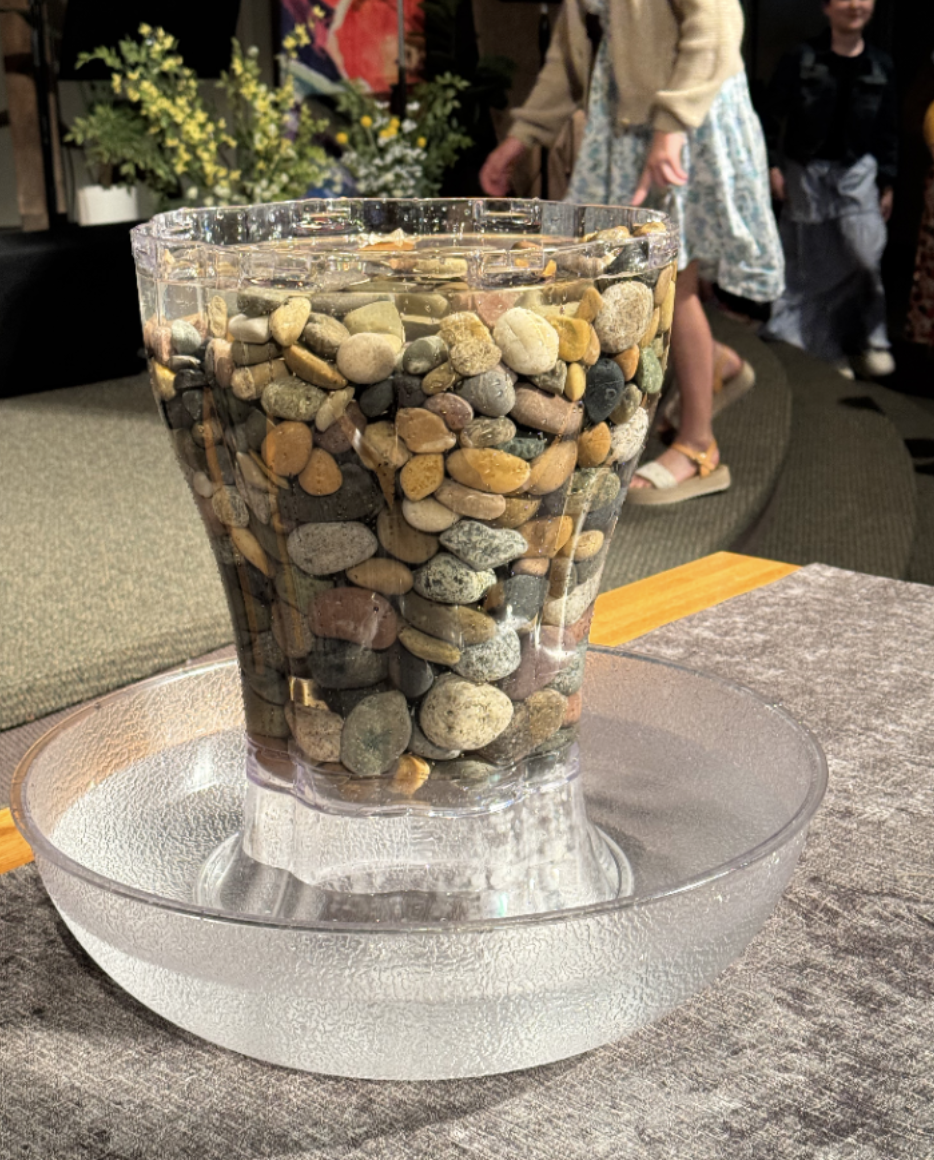
This past Sunday, we used a visual aid to help us contemplate how gratitude can displace our worry. Over the course of our worship service, we placed rocks in a large pitcher of water. We let the water represent our fear or anxiety, and the rocks represent words of gratitude and praise from this past year.
Ironically, after leading our worship service on Sunday, I found myself feeling anxious. I shared some of my angst with Julie, and she gently asked, “Didn’t you just say something about displacing fear through praise and gratitude?” It turns out that it is easier to preach about these ideas than experience them! Over the course of our conversation, Julie helped me reframe my perspective and notice some of the gifts of God we had encountered recently.
Our conversation reminded me that the work of displacing fear and anxiety is something we need to do in the context of community. We need the perspective, accountability, and encouragement of other people to help us see what we struggle to see. What I found powerful about our group exercise on Sunday was that it required the participation of the whole congregation to displace all the water. It was a corporate work and a cumulative effort.
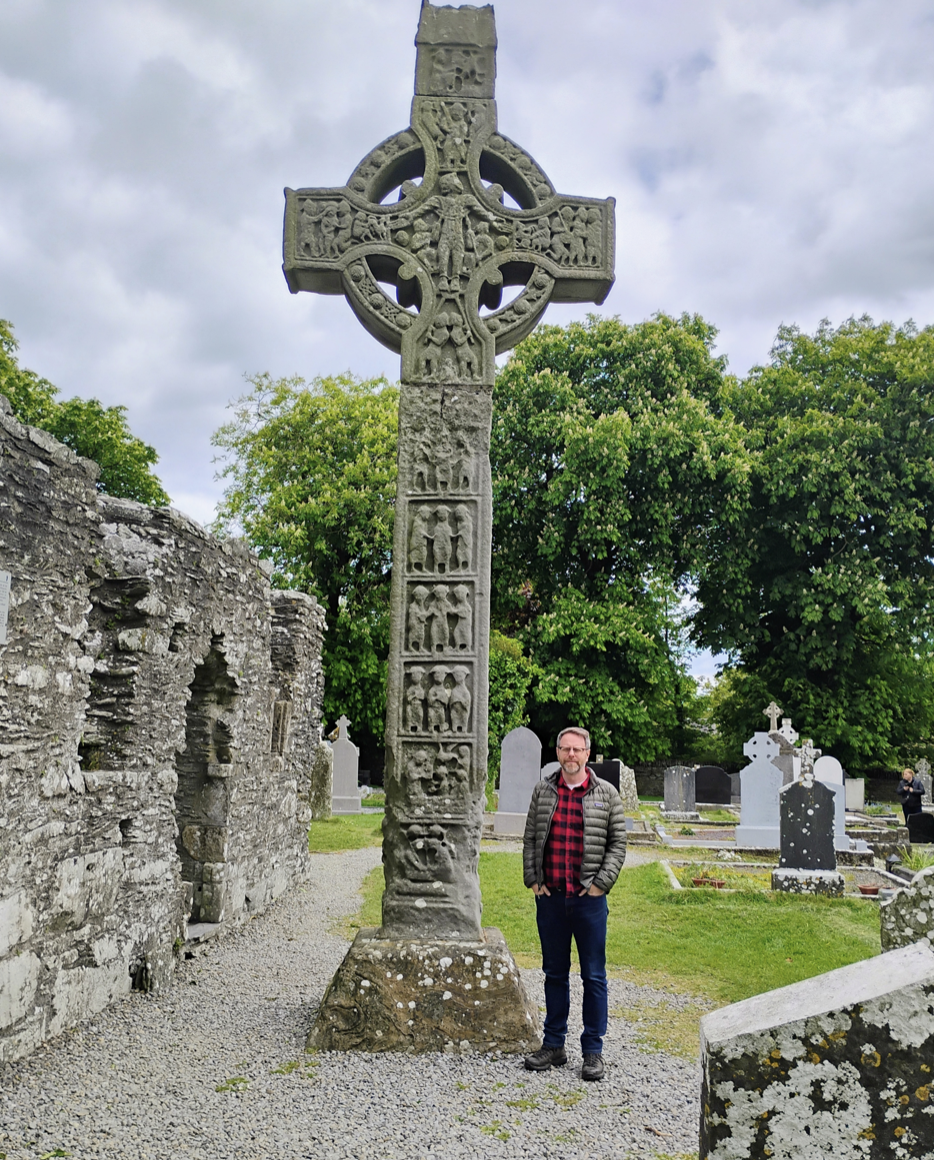
While I was in Ireland, I was also encouraged and inspired by the community of faith that precedes us. I had the chance to visit the oldest monastery in Ireland that dates back to the 6th century. There was something about getting in touch with a tradition that has been going on for centuries that helped me see past my contemporary anxiety. These ancient high crosses and stone ruins functioned like another monument of hope. The English poet and priest, Malcom Guite, made the following comment after visiting ancient monastic ruins. He writes, “they remind you that the church is older than your anxiety about it and will outlast your anxiety about it, so take a deep breath, relax, and pray.” Displacing fear is aided not only by our connection to our local body of Christ, but also by our connection to the universal church that existed long before we showed up on the scene!
I just finished reading Tish Harrison Warren’s latest book, What Grows in Weary Lands: On Christian Resilience. This is a helpful book for those who are navigating a season of disillusionment or spiritual aridity. She normalizes the reality that much of the spiritual journey feels more like a desert than an oasis. Yet, she provides some ancient wisdom and guidance for how we can navigate these seasons and discover resilience and hope in weary places. One of the ways we cultivate resilience is by navigating the journey of faith with others. She reminds us that the work of faith is something we do together. The creeds are notably in the plural sense—”we believe.” While it is right and good for us to personally appropriate our faith, our capacity to have faith requires the support of a whole community. Warren concludes, “We need others to hear, shape, and help address our questions. We need others to identify what threatens to buckle the wall of our faith - the various stresses on it and fissures in it. We need others to fortify us and help make us resilient.”
Philippians 4 needs to be read communally. These instructions from Paul were not written to an individual but to a whole church. We need one another to remember the deeper hope of God’s provision and love that transcends our fears and worries. As we move into the future together as a church, let us continue to displace our fear and worry together by remembering the bigger story of God’s salvation.
God Bless,
Pastor Phil